
ARTWORK ADVISORY AND COMMISSIONING SUPPORT
RAP Artwork and ICIP
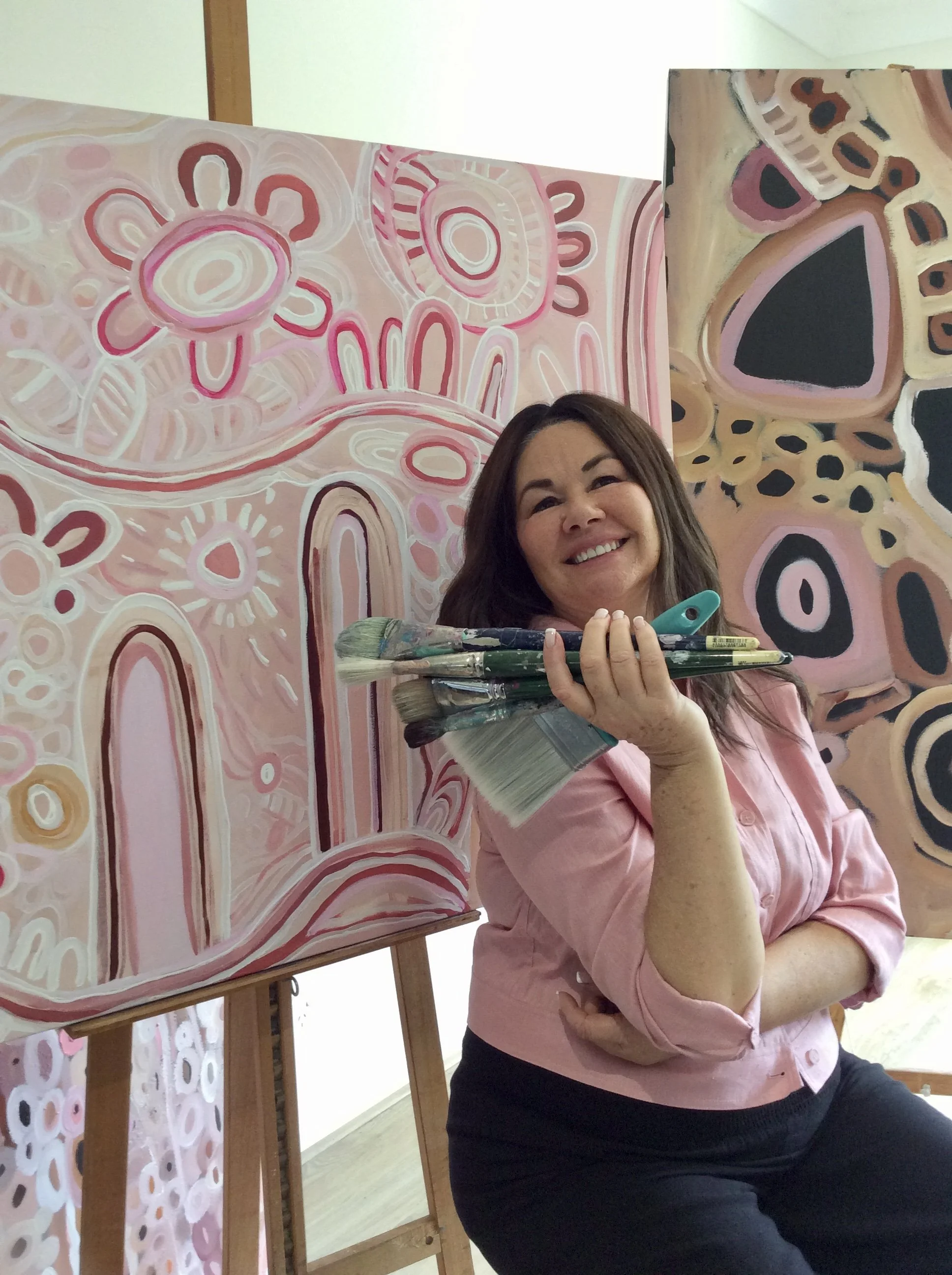

Commission an original artwork for your Reconciliation Action Plan (RAP) from Aboriginal artist Maria Watson-Trudgett, with guidance on copyright licensing, Indigenous Cultural and Intellectual Property (ICIP) and protocols.
Consat is incredibly grateful to Maria Watson-Trudgett for the stunning artwork she created for us. From the very first consultation, Maria took the time to understand our vision, meeting with our team to ensure that the piece would reflect both our values and the cultural significance we wanted to honour. Maria’s thoughtful approach, combined with her cultural guidance, allowed her to not only capture our ideas but to elevate them in a way that felt authentic and meaningful. As a company passionate about promoting First Nations peoples and cultures, we are proud to share this piece with our customers and community. Our licensing agreement further strengthens our commitment to supporting First Nations peoples, and we look forward to continuing our relationship with Maria in the future.
Lachlan Mackay, Head of Asia-Pacific Market Unit, Consat Telematics Pty Ltd
Why commission an original RAP artwork?
A lasting expression of your reconciliation journey
An original bespoke Aboriginal artwork can become a powerful expression of your organisation's reconciliation journey. More than a visual asset, it promotes First Nations creatives, reflects your values and communicates your commitment to reconciliation. When planned respectfully and in partnership with the artist, the artwork creates a lasting legacy that can inspire staff, engage stakeholders and bring greater meaning to your RAP.
First Nations voices at the centre
RAP artworks created by an Aboriginal and/or Torres Strait Islander artist bring authenticity, cultural connection and powerful storytelling to your organisation's reconciliation vision. They ensure First Nations voices are central to how your organisation communicates its commitment to reconciliation, while creating meaningful opportunities for First Nations artists and businesses.
More than a design
Commissioning a First Nations artist creates tangible procurement and economic participation opportunities, while supporting the RAP pillars of Relationships, Respect and Opportunities. The artwork serves as a visual reminder that reconciliation is an ongoing commitment.
How commissioning a RAP artwork works
01
Start with a yarn
We begin with a complimentary 30-minute yarn with a member of your organisation.
04
Artwork presentation
Once completed, we arrange an artwork presentation, either online or in person. I share progress images captured throughout the creative process, unveil the final artwork and guide your team through its story, symbolism and cultural meaning.
02
Artistic consultation
We then meet for a 1-hour Artistic Consultation to explore your organisation's vision for reconciliation, artwork concept and style, storytelling elements, branding colours, artwork size and layout, timelines, budget and other project requirements. Consultation fees apply.
05
Delivery and digital files
Once final payment has been received, your artwork is professionally packaged and dispatched by a specialist art freight provider. Packing and shipping costs are payable by the client. Where copyright licensing arrangements have been established, a high-resolution digital file of the artwork will be released for approved reproduction purposes across organisational materials and the RAP document.
03
Creating your artwork
A deposit is required to commence the commissioned artwork. I then create your artwork within the agreed timeframe.
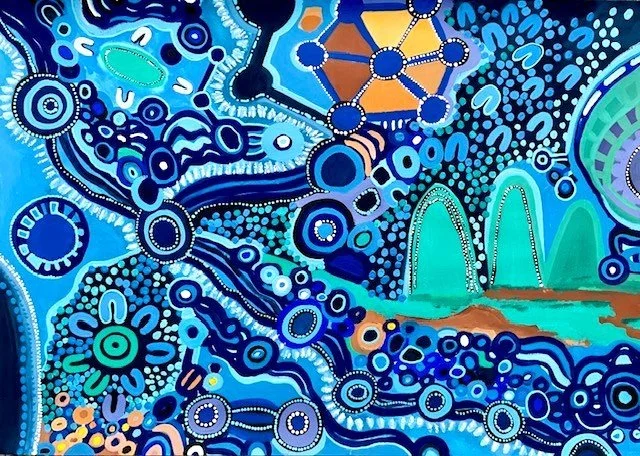
[Artwork title]. Artwork © Maria Watson-Trudgett
As an artist, the story behind each artwork begins to take shape as I learn about your organisation's vision for reconciliation and engage with your team through the artistic consultation process. By listening to your aspirations, preferences, branding colours and artistic style, I create a meaningful artwork that reflects your reconciliation journey. While these insights help guide the creative direction, I also bring my own artistic licence, cultural knowledge and storytelling approach to create a distinctive artwork that is both authentic and impactful.
When you are ready to launch your RAP, I can also present the artwork story and creative journey to the broader organisation, helping employees connect with the artwork and deepen their understanding of your reconciliation commitments.
The story behind your artwork
Where your artwork can be used
Copyright and licensing arrangements are determined through discussion with your organisation and documented in a copyright agreement. The scope of use can vary depending on how the artwork will be applied across your organisation's materials. Different categories of use may require different licensing considerations, including:
Corporate documents such as PowerPoint presentations, internal reports and presentation decks
Corporate publications such as RAP documents, annual reports and other branded publications
Digital assets such as websites, social media communications, email signatures and other online platforms
Early discussions about copyright, licensing and intended use are essential. They ensure the copyright agreement aligns with your organisation's needs while protecting Indigenous Cultural and Intellectual Property (ICIP) and the cultural integrity of the artwork. This process establishes clear permissions, appropriate usage rights and mutual understanding about how the artwork can be reproduced, shared and displayed across the organisation.
Work shirts, merchandise and prints
The artwork may be used on work shirts. However, merchandise and reproduction prints fall outside the core copyright licence for business collateral and are subject to separate arrangements and per-unit fees. All reproduction prints and merchandise must be arranged directly through me to protect the cultural integrity of the artwork, my rights as the artist and ICIP.
Copyright, licensing and ICIP
What is ICIP?
ICIP (Indigenous Cultural and Intellectual Property) refers to the rights of Aboriginal and/or Torres Strait Islander peoples to protect and maintain their cultural knowledge, stories, languages, artworks, symbols and other cultural expressions.
Organisations should care about ICIP because copyright alone does not always protect the cultural significance or community connections embedded within First Nations cultural material. Respecting ICIP helps ensure artwork, stories and knowledge are used appropriately, with proper permissions, cultural integrity and acknowledgement. It also demonstrates a genuine commitment to working respectfully with First Nations peoples and reduces the risk of cultural misuse or unintended harm.
Who owns the copyright?
The Artist retains copyright ownership of the commissioned artwork. The organisation is granted a licence to use the artwork for approved purposes as outlined in the copyright agreement.
Commissioning and licensing are separate
The commissioning fee covers the creation of the original artwork, while copyright licensing governs how the artwork is appropriately used across organisational materials. This separate agreement incurs additional fees.
RAP artwork examples
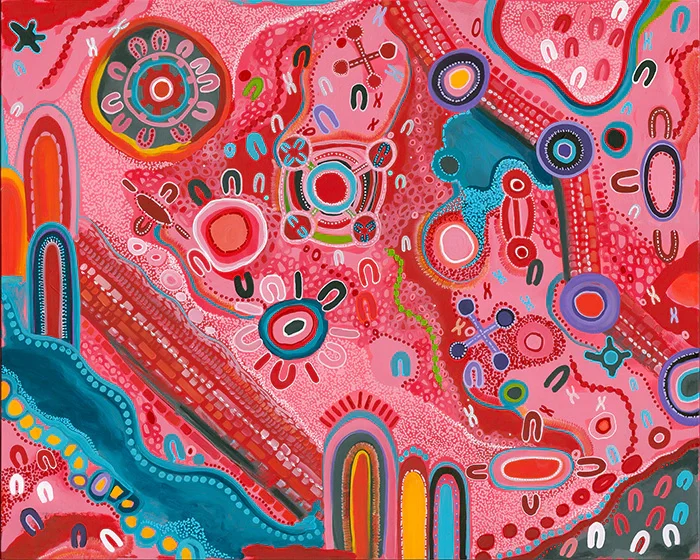
Embracing Reconciliation. Artwork © Maria Watson-Trudgett
It has been a real pleasure working with Maria. Her experience and insights are invaluable, and I know the broader RAP team view her as an integral partner. In fact, Marias’s guidance has been instrumental in shaping our RAP initiatives, ensuring they are not only effective but also culturally respectful and impactful. Maria is the talented artist behind the stunning canvas displayed in our Australia and New Zealand head office. Her artwork beautifully captures the essence of our commitment to reconciliation and diversity and serves as a daily reminder of the importance of these values in our workplace. Maria’s passion, creativity, and professionalism have made a lasting impression on our team. We are grateful for her contributions and look forward to continuing our partnership as we strive to make a positive difference in our community.
Domenic Stranieri, Vice President and General Manager, Thermo Fisher Scientific, Australia and New Zealand
Thermo Fisher Scientific: Reflect RAP
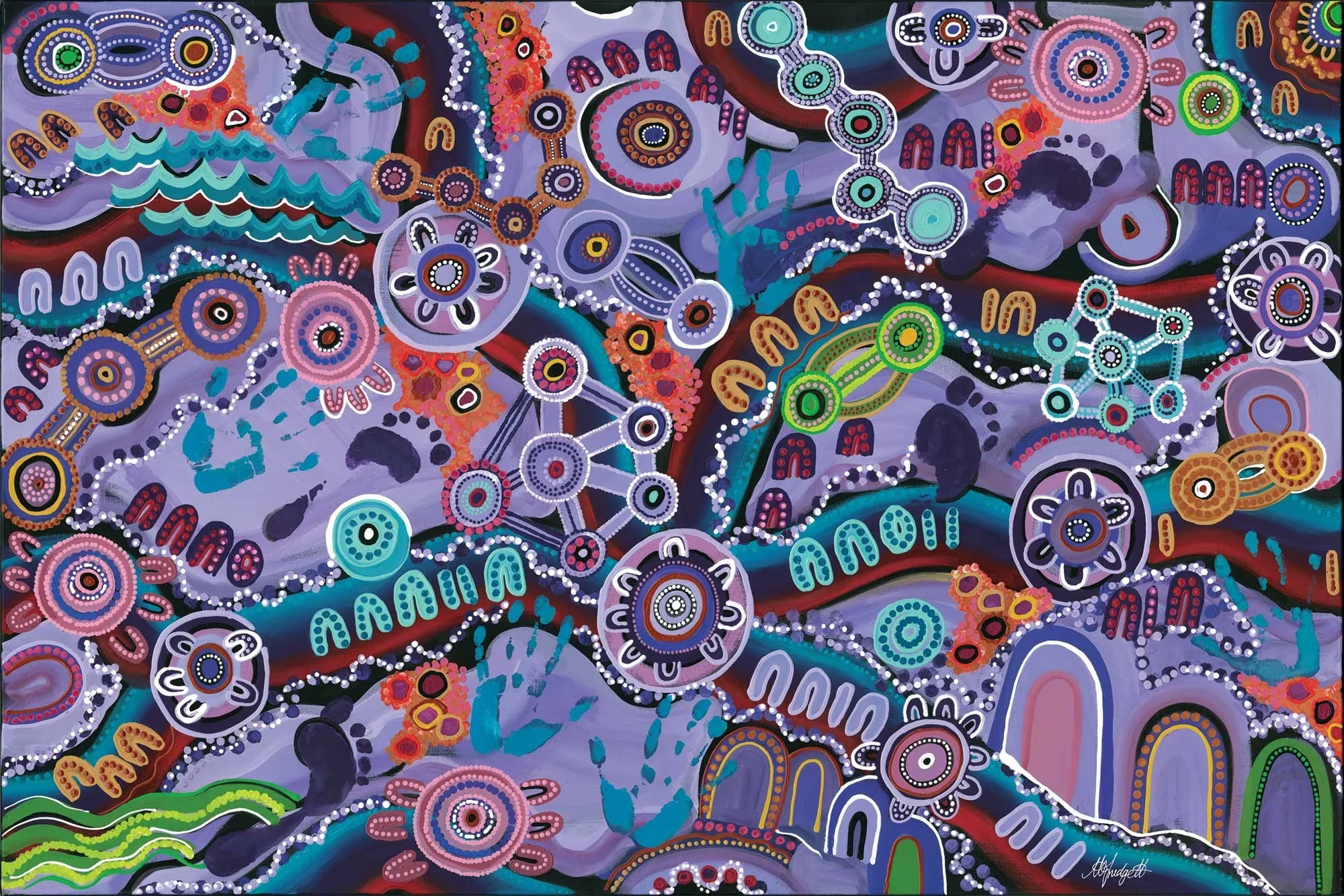
Positive Steps For Positive Change. Artwork © Maria Watson-Trudgett
Escient: Reflect RAP
With passion and enthusiasm, Escient began the journey of developing our first a Reflect RAP in 2022. To ensure we had the appropriate external support, Escient engaged Aboriginal Cultural Consultant and Artist, Maria Watson-Trudgett to not only help us in the development of our RAP, but to also produce a unique piece of artwork which would feature in the final document, and also be displayed in our state offices. From our first interactions with Maria, there was an immediate connection with the RAP team and very quickly Maria became our mentor, teacher, collaborator, and ultimately, a member of the Escient family. Our RAP has been endorsed and is a beautiful document the whole of Escient is so proud of. The artwork Maria produced, 'Positive Steps For Positive Change', is a striking representation of Escient's culture, values and also tells a story of the ongoing reconciliation journey we are on. Thank-you Maria for your cultural insights, creativity, and warmth which continues to guide us.
David Pink, Director, Escient Brisbane
Frequently asked questions
The most commonly asked questions about RAP Artwork. If you can’t find and answer to your question, please reach out here.
-
It is important for organisations to understand they are investing in a culturally informed process, not simply purchasing a visual asset.
There is no standard industry fee for an original bespoke artwork. Pricing depends on the size and complexity of the artwork, creative consultation requirements and materials. The artwork commission is a one-off fee for the creation of an original artwork.
Copyright and licensing fees are separate to the original artwork and priced according to the scope and intended use of the artwork. Licensing fees vary depending on how and where the artwork will be reproduced, published or distributed.
Importantly, a RAP artwork is more than an art commission, and fee structures reflect both my artistic practice and professional consulting expertise, not just the artwork itself. This includes:
Cultural guidance and protocol advice
Writing licensing agreements
ICIP education and protection
Collaboration with graphic designers and/or communications teams
Developing the artwork story aligned to your reconciliation commitments
Strategic First Nations insight
-
Each commissioned artwork is unique. Project timeframes are determined during our initial artistic consultation, taking into account the artwork's scope and desired delivery date.
-
No, they are two separate things. The commissioning fee covers the creation of the original artwork, while copyright licensing governs how the artwork is appropriately used across organisational materials. This separate agreement incurs additional fees.
-
The artwork may be used on work shirts. However, merchandise and reproduction prints fall outside the core copyright licence for business collateral and are subject to separate arrangements and per-unit fees. All reproduction prints and merchandise must be directly arranged through the Artist to protect the cultural integrity of the artwork, the Artist's rights and ICIP. The Licensee must not manufacture, reproduce or source these items independently.
-
No, artwork is not required to achieve endorsement. However, if your organisation intends to include First Nations artwork in the final RAP, it is best to begin the commissioning process early to allow sufficient time for artist engagement, artwork design, copyright licensing and RAP concept approvals prior to launch.
-
Yes. I offer independent ICIP guidance to organisations that already have artwork or are engaging First Nations artists and creators, helping ensure cultural rights, permissions and usage arrangements are appropriately managed.
-
I create RAP artworks for organisations nationwide.
Developing your RAP as well? I also work with organisations as a Reconciliation Action Plan consultant, from your first draft through to endorsement.
Ready to talk about your RAP artwork?
Book a free 30-minute Yarn to talk through your organisation's goals and next step.